The Regional Bureau for Education in Latin America and the Caribbean (OREALC/UNESCO Santiago) has dedicated a section of its website as a regional platform that gathers country-specific information on school closures based on review of governmental sources. This work is also informed by close collaboration with the Regional Cluster on Education in Latin America and the Caribbean coordinated by UNICEF y Save the Children. More information is available at https://en.unesco.org/fieldoffice/santiago/covid-19-education-alc
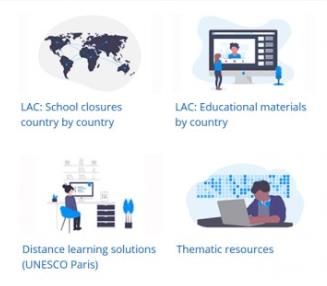
The website includes information on:
The UNESCO International Institute for Higher Education in Latin America and the Caribbean (IESALC) located in Caracas has created a site with information that higher hducation networks have been disseminating through their own channels. Available at: http://www.iesalc.unesco.org/2020/04/03/acciones-de-las-redes-de-educacion-superior-ante-el-covid-19/
IESALC has also created a list of national public policies on COVID-19 with relevance for the higher education sector, available at http://www.iesalc.unesco.org/2020/04/02/covid-19-y-educacion-superior-politicas-publicas-nacionales/
Global information
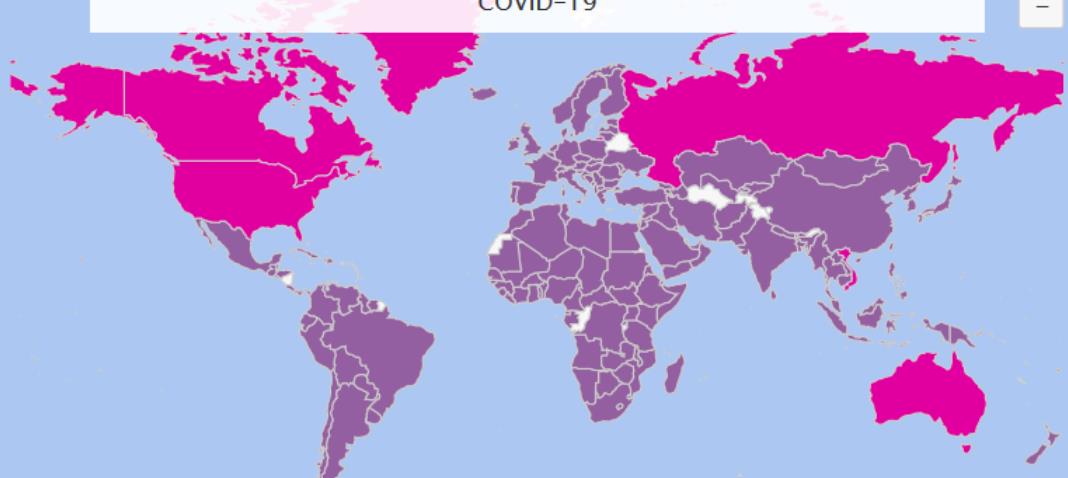
As of 8 April 2020, school closures at national level were affecting more than 91% of the world’s student population. Many of those countries that have not completely suspended classes have implemented local closures affecting millions more students.
UNESCO has designed a global platform consolidating information from field offices and official information from countries, including:
At the end of March, UNESCO created a webpage with information on the Global Education Coalition on COVID-19, created for the purposes of offering children and young people with inclusive learning options during this unprecedented interruption of education.
The Coalition is a multisectoral initiative to respond to the urgent education needs, as while COVID-19 is a major health problem, it is also an education crisis. More information on this worldwide initiative is available at: https://en.unesco.org/covid19/educationresponse/globalcoalition
UNESCO continues to work to ensure the continuity of life-long and life-wide learning continuity for all in any circumstances.
Contact for the Press
Carolina Jerez Henríquez
Regional Bureau for Education in Latin America and the Caribbean (OREALC/UNESCO Santiago)
c.jerez@unesco.org
Tel.+56992890175