Chinese and US Scholars Discuss the Future Development of Education through the Platform Created by the US-China Smart Education Conference
On March 19th, the Third US-China Smart Education Conference continued to produce fruitful results. Experts from China and the US had inspiring discussions on hotspot issues related to AI, ICT-based technology, smart campus and the two countries’ cooperation and exchanges in education. The Smart Learning Institute of Beijing Normal University released the 2018 Technology Outlook for Chinese Vocational Education: A Horizon Project Report. The “AI and Education” Forum, “Smart Campus Forum” and “International Conference on Smart Learning Environment” were held.
Yang Xiaochun, deputy director of the People-to-People Exchange Center under the Ministry of Education, Amy L. Baylor, project director at the Natural Science Foundation of the US, Zheng Yonghe, head of the Policy Bureau of the National Natural Science Foundation of China, Yang Zhijian, president of Open University of China and chairman of the Chinese Association of Education Technology and Zhou Qianjin, CEO of Seentao, shared insights with the audience in their reports. Li Jiayong, secretary of the CPC Committee of the Faculty of Education of Beijing Normal University and Phillip Harris, executive officer of the Association of Education Communication and Technology (AECT), moderated the session.。
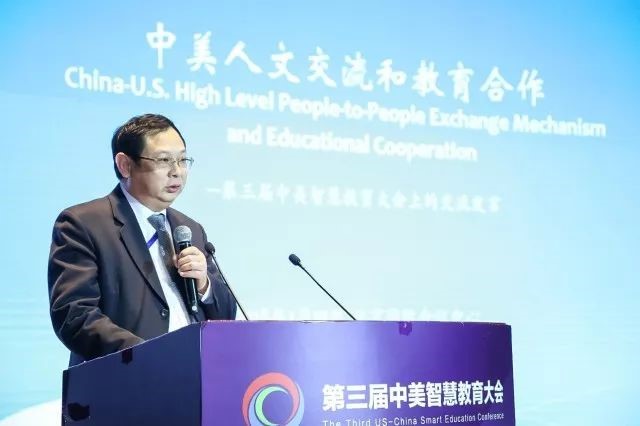
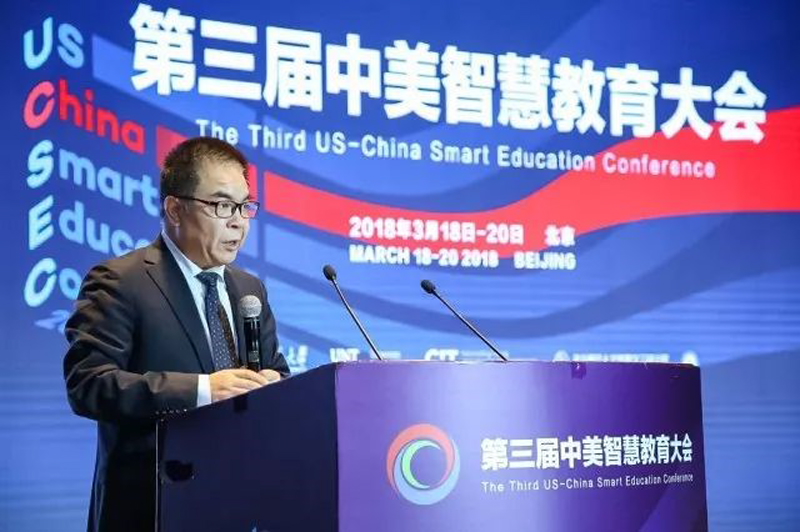
Mr. Yang Xiaochun, Deputy Director of the People-to-People Exchange Center under the Ministry of Education
In his report entitled “US-China People-to-People Exchanges and Cooperation in Education”, Yang Xiaochun pointed out that a high-level consultation mechanism for US-China people-to-people exchanges is already in place, which has led to meaningful dialogues between the two countries. Education serves a fundamental, leading, extensive and lasting role in the US-China people-to-people exchanges. He expressed his expectations for strengthened exchanges and cooperation in smart education, which would help solve the problem of imbalanced and inadequate development in China’s education, boost US-China relations and serve as a positive force in the building of a community of shared future for mankind.
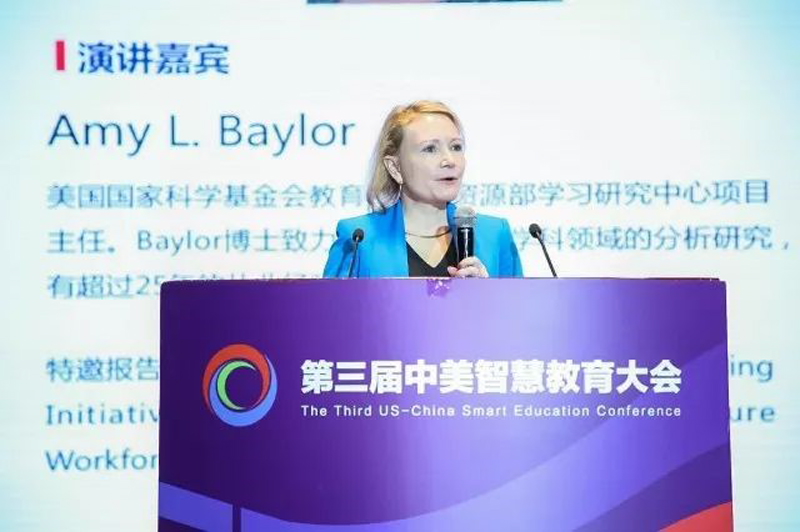
Ms. Amy L. Baylor, Program Director at the Natural Science Foundation of the US (NSF)
Director Amy L. Baylor reported on the “US National Science Foundation Funding Initiatives for Cyber Learning and the Future Workforce”. She spoke of the strategic planning, objectives and project experience of NSF and the Committee of Human Resources in terms of learning and learning environment, talent cultivation and smart education.
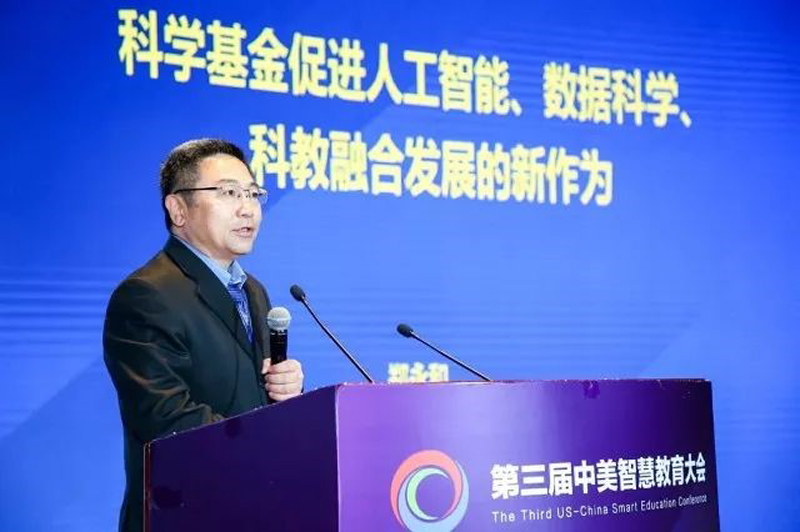
Mr. Zheng Yonghe, Head of the Policy Bureau of the National Natural Science Foundation of China (NSFC)
Mr. Zheng Yonghe delivered a report entitled the “New Role of NSFC in Promoting AI, Data Science and Industry-Education Integration”. He talked about how the major NSFC funding supports AI and big data development by following the trend of the time and emphasized on the opportunities and challenges presented by the new concept of industry-education integration against the backdrop of ICT in education. He expressed his expectations for the significant role of NSFC funding in K-12 education research and educational innovation and reform.
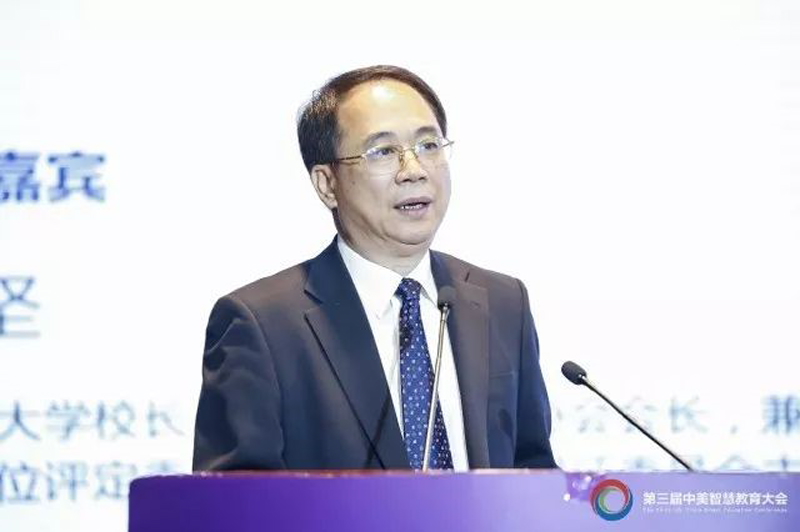
Prof. Yang Zhijian, President of Open University of China and Chairman of the Chinese Association of Education Technology
Prof. Yang Zhijian’s report titled “The Call of the Future: New Opportunities Presented by ICT in Education” pointed out that as China’s ICT-based education enters a stage of 2.0, digital learning environment, resources and modes should be explored for the purpose of narrowing regional and urban-rural digital gaps and promoting education equality. He also remarked on the practical experience of Open University of China in promoting deep integration of new technology and education.
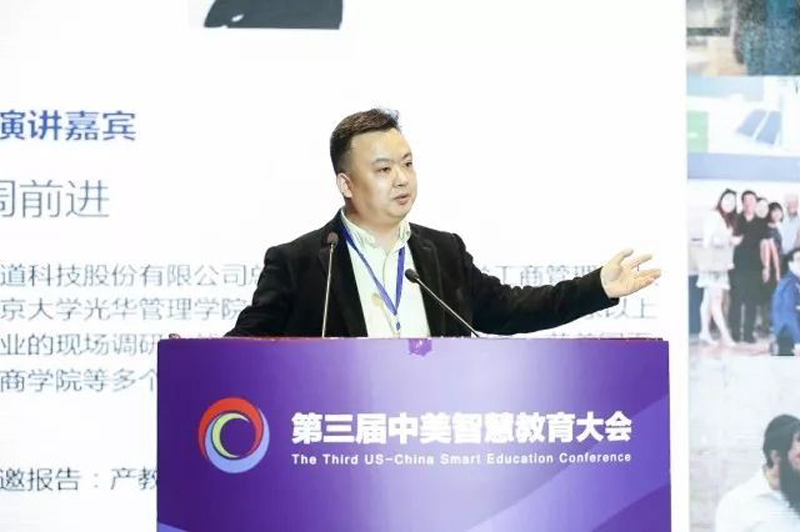
Mr. Zhou Qianjin, CEO of Seentao
Mr. Zhou Qianjin reported on the topic of “Industry-Education Integration and Collaborative Cultivation of Talent” from the perspective of an enterprise. According to Zhou, the education service industry has huge potential to tap in the context of smart education. He believed that a platform which gathers businesses, schools and social resources will better serve the people and boost regional economic development.
Mr. Li Jiayong, secretary of the CPC Committee of the Faculty of Education of Beijing Normal University
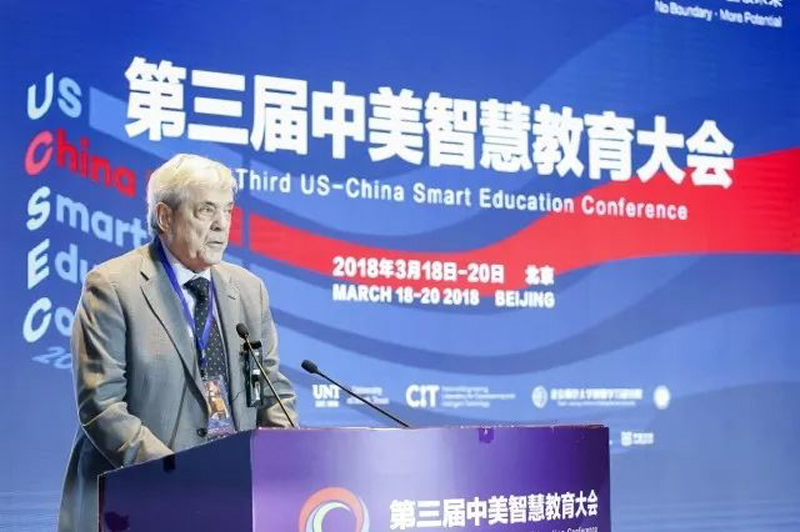
Mr. Phillip Harris, executive officer of the Association of Education Communication and Technology
During the conference, the 2018 Technology Outlook for Chinese Vocational Education: A Horizon Project Report was released by Prof. Huang Ronghuai, director of the National Engineering Laboratory for Cyberlearning Intelligent Technology and co-dean of the Smart Learning Institute of Beijing Normal University. The report is a major research achievement following the 2016 NMC Technology Outlook for Chinese K-12 Education, A Horizon Project Regional Report and the 2017 NMC Technology Outlook Chinese Higher Education, A Horizon Project Regional Report. This year’s report points to the nine critical trends in technological application in China’s vocational education, nine challenges affecting technological application and major development of twelve education technologies. It reflects the general trend of China’s technological application in its vocational education.
As the joint chief investigator of the 2018 Horizon Project on China’s Vocational Education, Prof. Huang, on behalf of the Smart Learning Institute, granted honorary certificate to the expert team of the project. The session was moderated by Dr. Gao Yuan, director of the Open Education Resource Laboratory of the Smart Learning Institute of Beijing Normal University. Dr. Gao also served as the joint chief investigator of the project. She thanked the experts for their contribution.
As the joint chief investigator of the 2018 Horizon Project on China’s Vocational Education, Prof. Huang, on behalf of the Smart Learning Institute, granted honorary certificate to the expert team of the project. The session was moderated by Dr. Gao Yuan, director of the Open Education Resource Laboratory of the Smart Learning Institute of Beijing Normal University. Dr. Gao also served as the joint chief investigator of the project. She thanked the experts for their contribution.
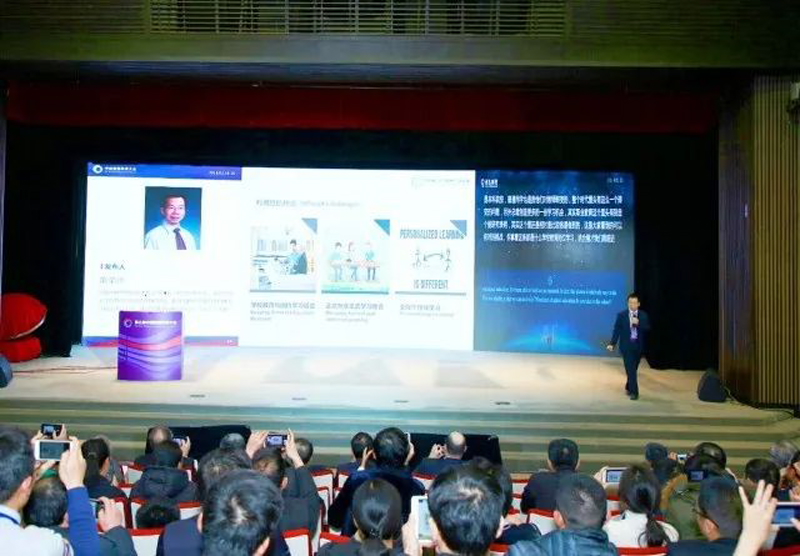
The Release of the Report
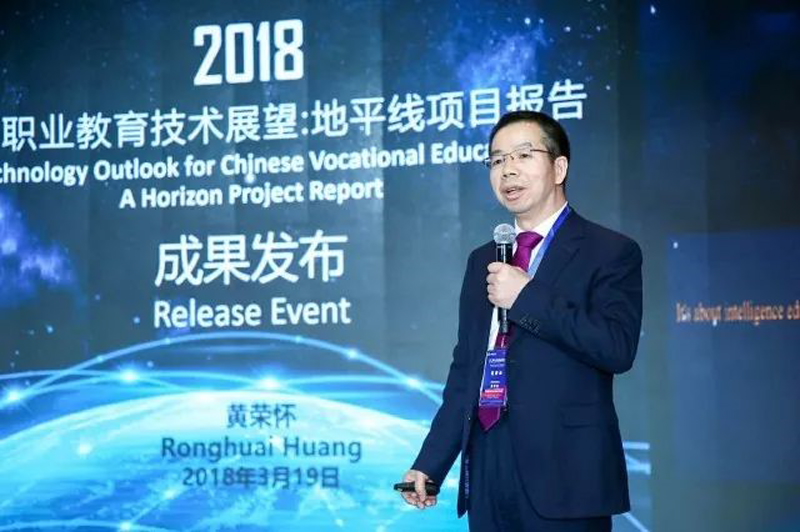
Prof. Huang Ronghuai, Co-Dean of the Smart Learning Institute of Beijing Normal University 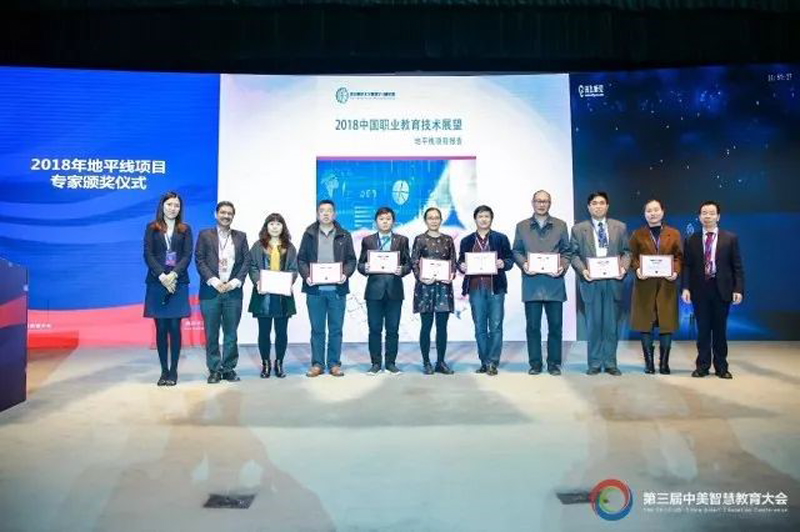
The Awarding Ceremony for the Expert Team of the 2018 Horizon Project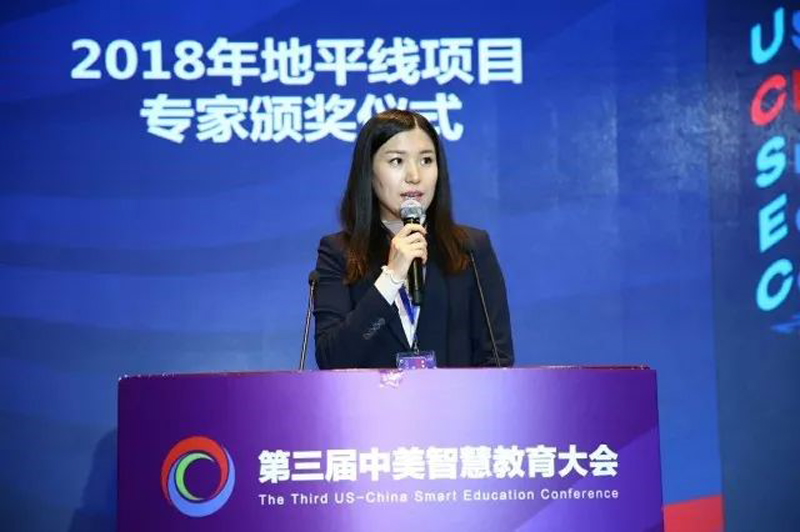
Dr. Gao Yuan, Director of the Open Education Resource Laboratory of the Smart Learning Institute of Beijing Normal University 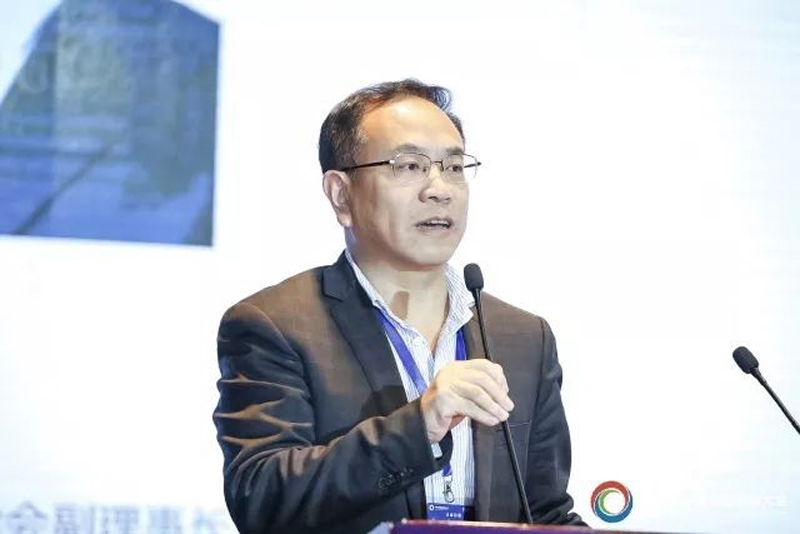
The “AI and Education” Forum
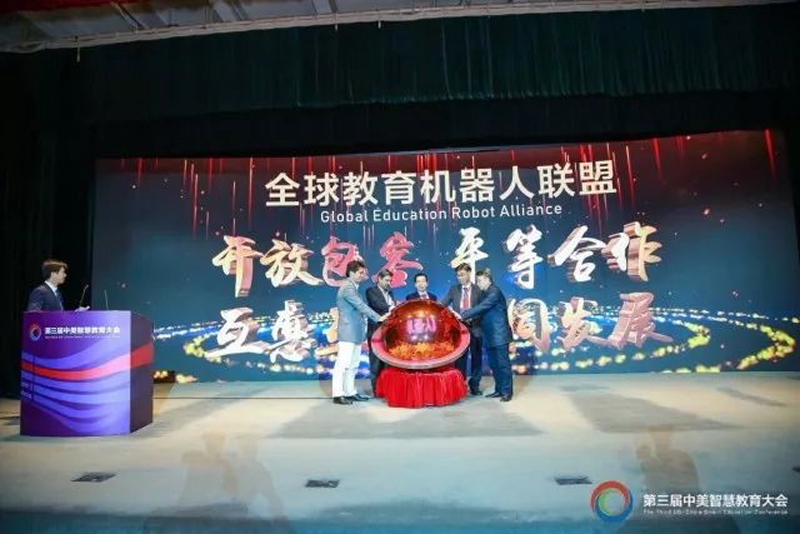
The Launching Ceremony of the Global Education Robot Alliance
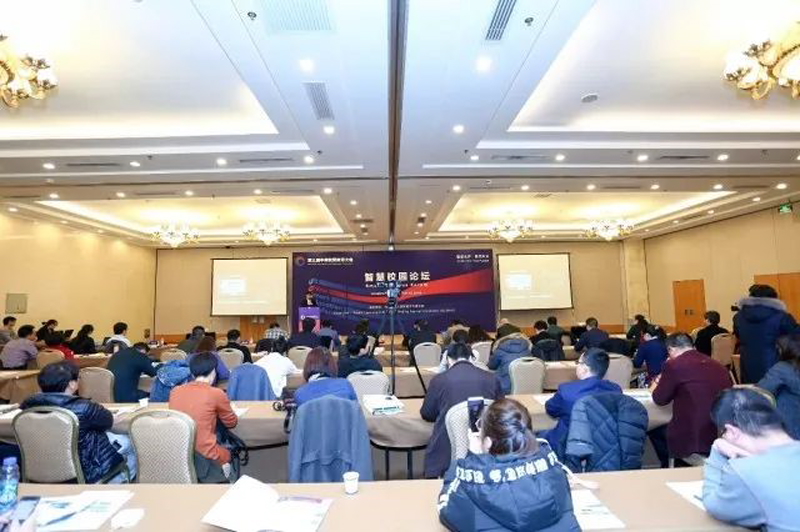
The “Smart Campus Forum”
The keynote report entitled “Learning Education System through Collaborative Networks” was delivered by President Eugene G. Kowch of AECT at the closing ceremony. According to Kowch, AI and VR application has changed the conventional learning environment, which will inevitably lead to transformations in ways of learning and education system. He called for the introduction of new technologies such as AI and VR in vocational education, and the promotion of inter-institutional cooperation and exchanges among vocational schools. Prof. Huang shared with the audience his ideas on smart education, reviewed the progress of the US-China Smart Education Conference and expressed his thanks to the guest speakers and participants. The closing ceremony was moderated by Vice Provost Pia Wood of the University of North Texas.
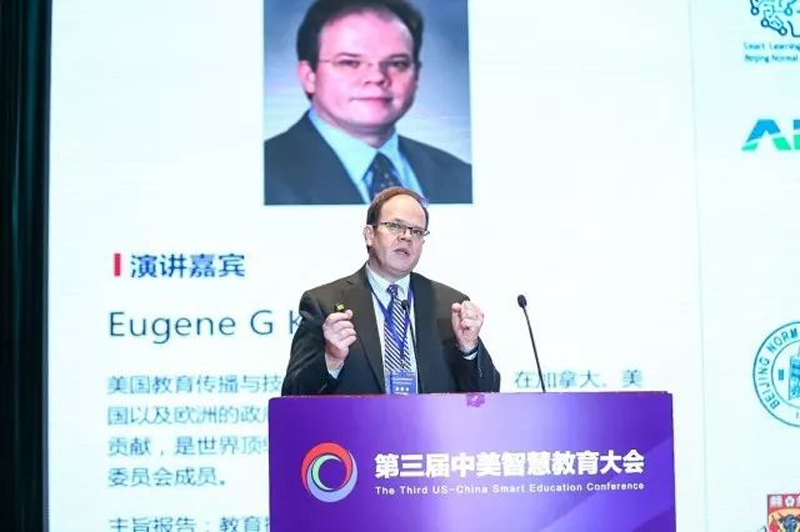
Eugene G. Kowch, President of Association for Education Communications and Technology
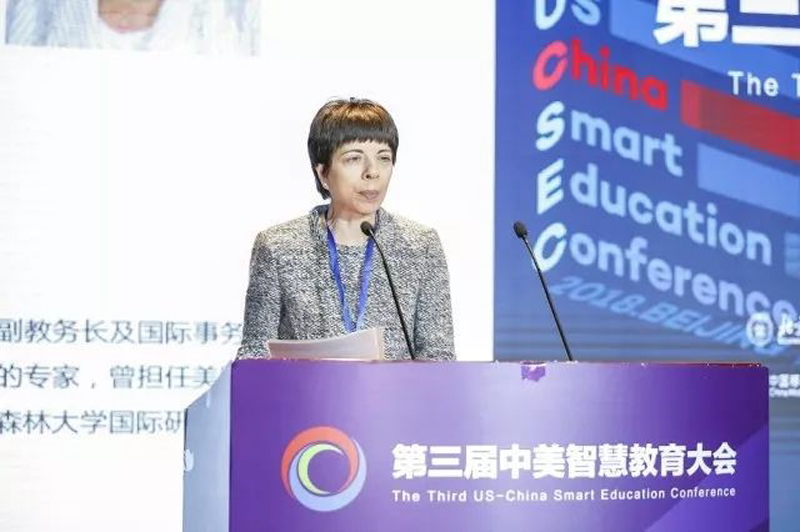
Vice Provost Pia Wood, University of North Texas, US